



Quick answer: dual is not a third type of suspension. Spring and hydraulic describe how a shock soaks up a bump. Dual just tells you a scooter has shocks at both the front and rear instead of one end. For most city commuters the order that actually matters is air-filled tires first, then a controlled shock at the end that takes the worst hits. A spring setup is plenty for smooth streets, hydraulic earns its keep on broken pavement and at higher speed, and dual is only worth paying for when both ends genuinely need help.
In this guide
- Spring suspension: simple, cheap, a little bouncy
- Hydraulic suspension: controlled and smooth
- Dual suspension: what it really means
- The three at a glance
- The part nobody mentions: your tires are suspension too
- Which suspension do you actually need?
- Zero 8 vs Zero 9 suspension
- FAQ
What is spring suspension on an electric scooter?
Spring suspension uses a coil spring, or sometimes a stack of rubber elastomers, that compresses when you hit a bump and pushes back as it recovers. It is the most common setup on commuter scooters for one good reason: it is simple, durable, cheap to build, and there is almost nothing to service. No fluid, no seals, no leaks.
The trade-off is control. A bare spring stores the energy from a bump and then returns it, so on repeated hits it can feel a little bouncy or pogo, especially if you are a heavier rider or carrying a bag. On smooth tarmac you will rarely notice. On a stretch of cracked sidewalk taken at speed, you feel the spring working overtime.
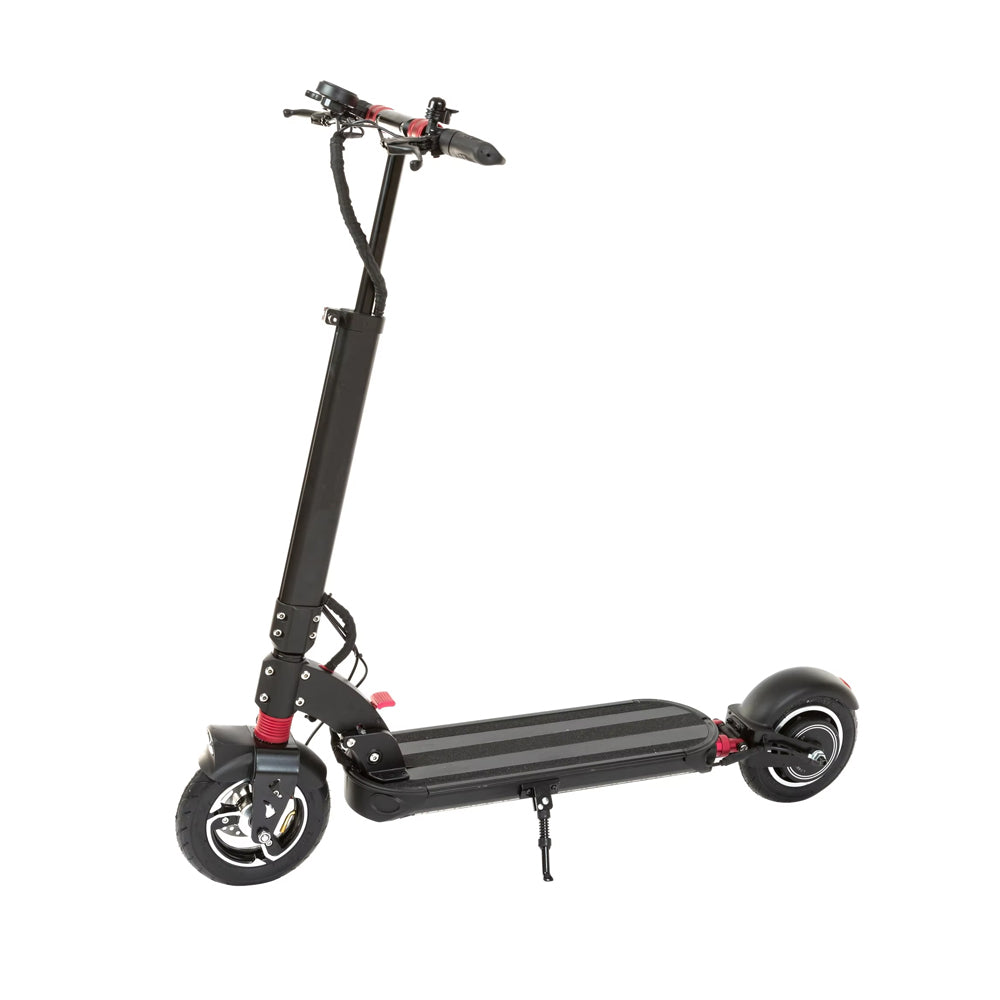
Spring is the right call for shorter, smoother commutes where you want comfort without paying for, or maintaining, anything fancy. The 25 mph electric scooter in the DRIDER lineup, the Zero 8, runs exactly this kind of setup: a front spring plus a rear dual-spring arrangement.

What is hydraulic suspension, and is it better?
Hydraulic suspension adds a fluid-filled damper to the equation, the same idea as a car shock or a mountain bike fork. When you hit a bump, the spring still gives you the travel, but oil is forced through small internal ports, and that resistance slows the motion down and controls the rebound. The result is a smoother, more planted ride that does not bounce back at you. On most scooters hydraulic means a spring paired with a hydraulic damper, not a damper on its own.
Is it better? On the right surface, yes. Hydraulic damping shines when bumps come fast and often: potholes, expansion joints, broken pavement, and the kind of repeated hits that make a plain spring feel busy. It also keeps the chassis composed at higher speed, which matters more the faster you ride. The cost is real, though. Hydraulic units add price, add a little weight, and over years of hard use the seals can wear and need service, where a spring just keeps springing.
This is the comfort upgrade on the Zero 9, the 30 mph electric scooter in the range, which DRIDER specs with hydraulic suspension. It is the faster, all-round commuter, and a more controlled shock is the right partner for the extra speed.
What does dual suspension actually mean?
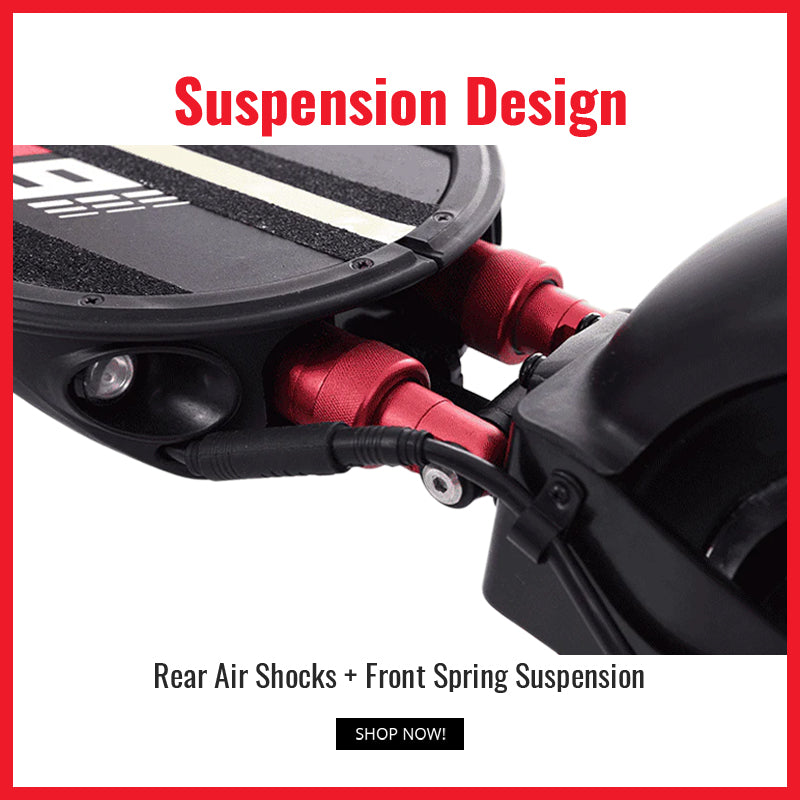
Here is the bit most spec sheets blur. Dual suspension does not describe the spring medium at all. It just means the scooter has suspension at both the front wheel and the rear wheel, as opposed to front-only or rear-only. A dual-suspension scooter could use springs at both ends, hydraulic at both ends, or a mix of the two.
The one thing to remember
Spring vs hydraulic = how the shock works. Front-only vs rear-only vs dual = where the shocks are. They are two separate questions, and a listing that sells dual suspension as if it were an upgrade over hydraulic is mixing them up. Always check both: the medium and the coverage.
Why does coverage matter? Front suspension protects your wrists and steering from sharp hits and helps the front tire stay planted. Rear suspension protects your knees and lower back and keeps the driven wheel in contact under acceleration. If a scooter only has one end covered, you feel the other end. Dual coverage spreads the work, which is why it usually feels noticeably calmer over a rough block. The best-riding commuters tend to be dual coverage with at least the rear damped.
Spring vs hydraulic vs dual at a glance
| Spring | Hydraulic | Dual (coverage) | |
|---|---|---|---|
| What it is | Coil or rubber spring | Spring plus fluid damper | Shocks front and rear |
| Ride feel | Good, can bounce | Smooth, controlled | Calmest overall |
| Best surface | Smooth streets | Broken pavement, speed | Mixed and rough |
| Maintenance | Almost none | Seals wear over years | Depends on medium |
| Cost / weight | Lowest | Higher | Higher |
Comfort by surface, in plain terms
General category guidance for typical commuter setups, not a measured test of any one scooter. Your tires, PSI, weight, and speed all shift the real result.
Smooth bike lane, spring is plenty comfort 5/5
Cracked city streets, spring 3/5
Cracked city streets, hydraulic 4/5
Rough mixed terrain, dual plus hydraulic 5/5
The part nobody mentions: your tires are suspension too
Before you spend up for the fanciest damper, look down. Air-filled (pneumatic) tires are the first and cheapest suspension on any scooter. A large pneumatic tire run at the right pressure soaks up small, high-frequency vibration that no spring or shock even reaches, the buzz from rough asphalt that wears you out over a long ride.
This is why tire type can matter as much as the suspension badge. A scooter on solid (airless) tires with springs can ride harsher than one on big pneumatic tires with modest suspension, because the solid tire passes the buzz straight to the deck. It is a real difference between the two DRIDER commuters: the Zero 8 pairs a pneumatic front tire with a solid rear, while the Zero 9 runs pneumatic tires at both ends. If outright smoothness is the goal, weigh the tire setup and the suspension together, not one in isolation.
Which suspension do you actually need?
Match the hardware to your route and your body, not to the longest spec list. Here is the honest version.
- Smooth, short commute, tight budget: spring suspension is all you need. Pocket the savings. The Zero 8 fits here.
- Mixed city streets, potholes, longer rides, or you ride faster: step up to hydraulic, ideally with both wheels covered. Control at speed is worth the spend. The Zero 9 fits here.
- Heavier rider or you carry loads: lean toward hydraulic and dual coverage, because a plain spring compresses further and bounces more under more weight.
- Mostly rough or unpaved surfaces: you want dual coverage, damped shocks, and big pneumatic tires together. This is the one case where the full package earns its price.
Notice that most everyday commuters land in the first two rows. You rarely need the maximum. You need the right match.

Best for smooth, budget commutes
DRIDER Zero 8
Front spring plus rear dual-spring suspension, a 25 mph top speed, and a compact fold for apartment storage. The low-maintenance pick for tidy city streets.
From $599 See the Zero 8 →
Best all-round, rougher streets and speed
DRIDER Zero 9
Hydraulic suspension, pneumatic tires front and rear, and a front disc plus rear drum brake. Knocks on 30 mph (around 29 mph, 47 km/h, GPS-verified) and stays composed doing it.
From $799 See the Zero 9 →
Zero 8 vs Zero 9: the suspension difference
If you are choosing between the two DRIDER commuters specifically, suspension is one of the clearest dividing lines, and it tracks the price gap honestly.
| Zero 8 | Zero 9 | |
|---|---|---|
| Suspension (as specced) | Front spring + rear dual spring | Hydraulic |
| Tires | Pneumatic front, solid rear | Pneumatic front + rear |
| Top speed | 25 mph | ~29 mph (markets as 30) |
| Brakes | Rear drum + regen | Front disc + rear drum |
| From | $599 | $799 |
The short version: the Zero 8 gives you a comfortable spring ride for smooth routes at the lower price, and the Zero 9 spends the extra on a hydraulic shock plus a fully pneumatic tire setup, which is the combination that actually pays off when the road is broken or you are moving faster. Pick the Zero 8 if your commute is tidy and you want to save. Pick the Zero 9 if you want the calmer, more planted ride and the headroom of a faster 30 mph electric scooter.
Suspension is only half of comfort and control. Pair it with the right brakes and a safe following distance, and for any setup, keep your tire pressure in the recommended range. Bodies like the U.S. Consumer Product Safety Commission publish general e-scooter safety guidance worth a read before you ride faster.
Frequently asked questions
Is hydraulic suspension better than spring on an electric scooter?
It is better on rough surfaces and at higher speed, because the fluid damper controls rebound and stops the bounce a plain spring can have. On smooth streets at moderate speed the difference is small, and a spring is cheaper and needs almost no maintenance. Better depends on your route.
What does dual suspension mean on a scooter?
It means there is a shock at both the front and the rear wheel, rather than only one end. It describes coverage, not the spring type, so a dual-suspension scooter can use springs, hydraulics, or a mix. Always check the medium separately from the coverage.
Do I need suspension if my scooter has pneumatic tires?
Pneumatic tires absorb a lot of small vibration on their own, so a well-tired scooter can ride smoothly with only modest suspension. Suspension still helps with larger hits like potholes and curbs. The best comfort comes from good tires and suspension working together, not one alone.
Does the DRIDER Zero 8 have suspension?
Yes. The Zero 8 is specced with a front spring and a rear dual-spring setup, which gives it a comfortable ride on smooth and lightly broken streets. It pairs that with a pneumatic front tire and a solid rear tire.
Is the DRIDER Zero 9 suspension hydraulic?
DRIDER specs the Zero 9 with hydraulic suspension, paired with pneumatic tires front and rear. That combination is aimed at a smoother, more planted ride at the Zero 9's higher speed.
Can you upgrade an electric scooter's suspension?
Sometimes, if aftermarket shocks exist for your model and the mounts match, but it is fiddly and can affect ride height and warranty. For most riders it is simpler and safer to buy the scooter that already has the suspension you need.
Cite this guide
Found this useful? Link back to it:
https://www.driderescooters.com/blogs/news/electric-scooter-suspension-spring-vs-hydraulic-vs-dual
Match the suspension to your route
Spring for smooth streets, hydraulic for the rough ones. Both fold compact, ship from the USA, and come with a 12-month warranty.
Compare the Zero 8 and Zero 9 →Ride within your local e-scooter speed and road-use laws. Always wear a helmet.
Our Products


ZERO 9 Scooter
$799.00