



Zero 9 vs Ninebot F2 Pro 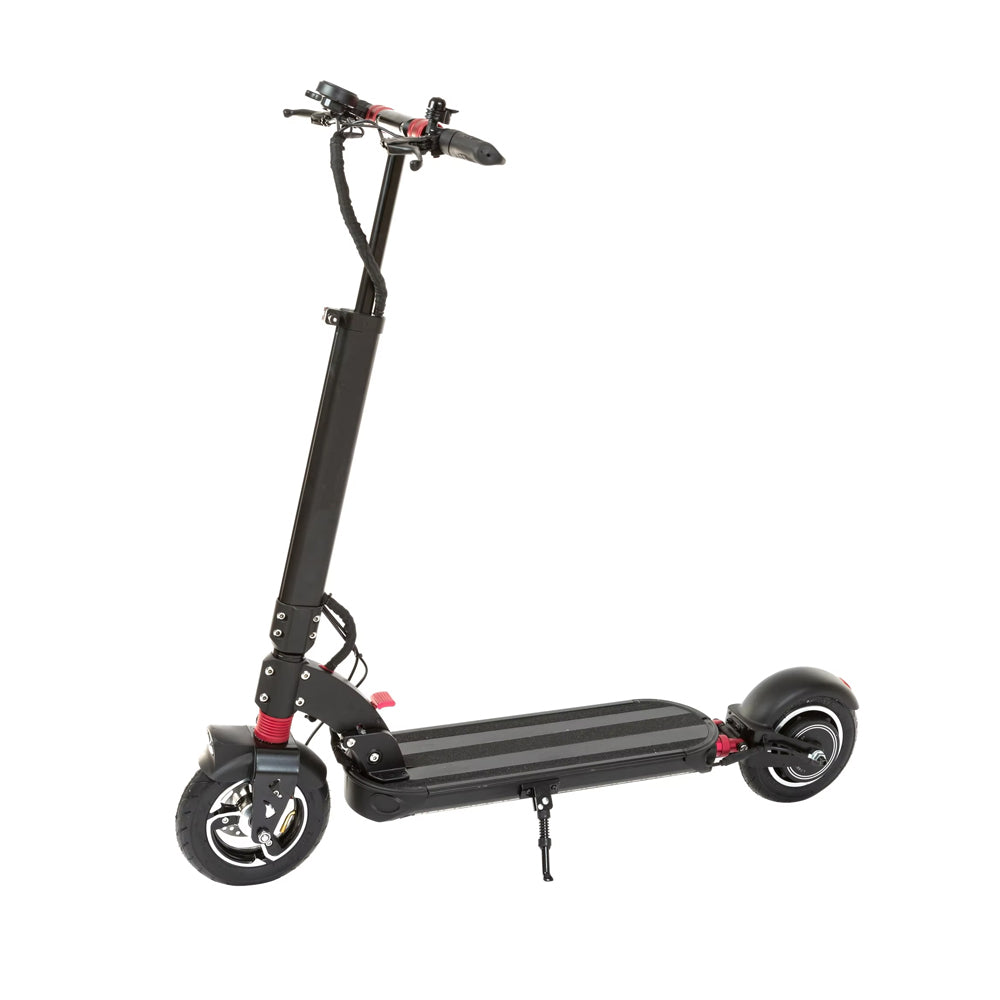
If you are comparing zero 9 vs ninebot f2 pro, the decision is not simply which scooter has the better features? It is whether you want more real speed and braking confidence or more smart commuter technology and claimed range.
But if you're a rider who cares most about speed, braking, and hill power, the Zero 9 30 MPH electric scooter is the stronger performance pick. This guide is for you, discover the important aspects related to scooter while making a buying decision.
In this guide
Who Each Scooter Is For
The Zero 9 is built for riders who want the scooter to feel quick, planted, and more performance-focused than a standard 20 mph commuter. With a tested top speed of about 28.4 mph, the Zero 9 is roughly 42% faster than the F2 Pro's 20 mph cap.
Choose the Zero 9 if you want:
- Faster real-world riding, with about 28.4 mph tested speed
- Stronger braking confidence, with about 10.2 ft stopping distance from 15 mph
- Better hill response from a 600W nominal motor
- Dual suspension for rougher roads and longer rides
- A wider, more planted deck feel
- Performance-per-dollar instead of app-heavy tech
Choose the F2 Pro if you want:
- Smart commuter features over higher speed
- A 34-mile / 55 km claimed range
- 10-inch self-sealing tubeless tires
- IPX5 splash resistance
- A higher 265 lb rider limit
- Turn signals, TCS, Apple Find My, app support, and e-horn
- Tech-per-dollar instead of performance-per-dollar
The F2 Pro is better for riders who want a smarter, more feature-rich commuter rather than a faster performance scooter.
| Category | DRIDER Zero 9 | Segway Ninebot F2 Pro | Winner | Why It Matters |
|---|---|---|---|---|
| Top speed | 28.4 mph tested; can knock on 30 mph in favorable/downhill conditions | 20 mph official max | Zero 9 | Zero 9 is about 42% faster than the F2 Pro. |
| 0–15 mph | 4.2 sec tested | Slower; capped at 20 mph | Zero 9 | Faster launch helps in stop-start city riding. |
| Motor | 600W nominal, around 1200W peak in review context | 450W nominal, 900W max | Zero 9 | More output supports acceleration and hills. |
| Range | 21.7 mi tested | 34 mi / 55 km claimed, about 22 mi at max speed | F2 Pro on claim | F2 Pro wins paper range; Zero 9 gives tested real-world data. |
| Battery | About 624Wh | About 460Wh | Zero 9 | Zero 9 has about 36% more battery capacity, but uses more at higher speed. |
| Brakes | Disc + drum + regen; 10.2 ft from 15 mph | Front disc + rear E-ABS + TCS | Zero 9 for stopping | Shorter stopping distance matters at higher speeds. |
| Tires | 8.5-inch pneumatic tires | 10-inch self-sealing tubeless tires | F2 Pro | F2 Pro reduces flat-maintenance anxiety. |
| Suspension | Dual suspension | Front suspension only | Zero 9 | Dual suspension gives better front-and-rear impact control. |
| Deck | About 20.5 in x 7.7 in | Standard commuter deck | Zero 9 | More deck space improves stance and stability. |
| Weight | Around 40–41 lb | Around 40.8–41 lb | Tie | Neither is lightweight; both are carryable for many riders. |
| Rider limit | 220 lb | 265 lb | F2 Pro | F2 Pro is better for heavier riders. |
| Folded practicality | Compact fold; folding handlebars | Foldable commuter frame | Zero 9 | Zero 9 is strong for trunk and storage practicality. |
| Smart features | Basic display, lighting, commuter hardware | TCS, turn signals, Apple Find My, app, e-horn | F2 Pro | F2 Pro clearly wins tech-per-dollar. |
| Water resistance | Treat conservatively | IPX5 | F2 Pro | IPX5 is splash resistance, not waterproofing. |
| Charge time | Around 6 hours on | Around 6–8 hours, depending on source/charger | Zero 9 | Faster charging helps daily riders. |
| Value | Performance-per-dollar | Tech-per-dollar | Tie | Zero 9 buys speed/brakes/suspension; F2 Pro buys features/range tech. |
How We Compared Them
This zero 9 vs f2 pro comparison uses a simple buyer-first rule: tested performance data carries more weight.
For the Zero 9, the key tested performance data includes:
- 28.4 mph tested top speed
- 21.7 miles tested real-world range
- 0–15 mph in about 4.2 seconds
- 10.2 ft braking distance from 15 mph
- 200 ft / 10% grade hill climb in about 13.6 seconds
- Test context using a 165 lb rider for hill data
- Dual suspension and 8.5-inch pneumatic tires
For the F2 Pro, the strongest official specification data includes:
- 20 mph official top speed
- Up to 34 miles / 55 km claimed theoretical range
- About 22 miles at max speed
- 900W max output
- 22% claimed grade
- 265 lb rider limit
- IPX5 water resistance
- 10-inch self-sealing tubeless tires
The insight is clear: the Zero 9 has stronger tested performance proof, while the F2 Pro has stronger official commuter-feature proof.
Safety should be judged the same way. Speed, braking distance, tire grip, suspension, lighting, rider skill, protective gear, and road conditions all work together. A faster scooter is only useful if the braking and handling match the speed.
Top Speed & Acceleration
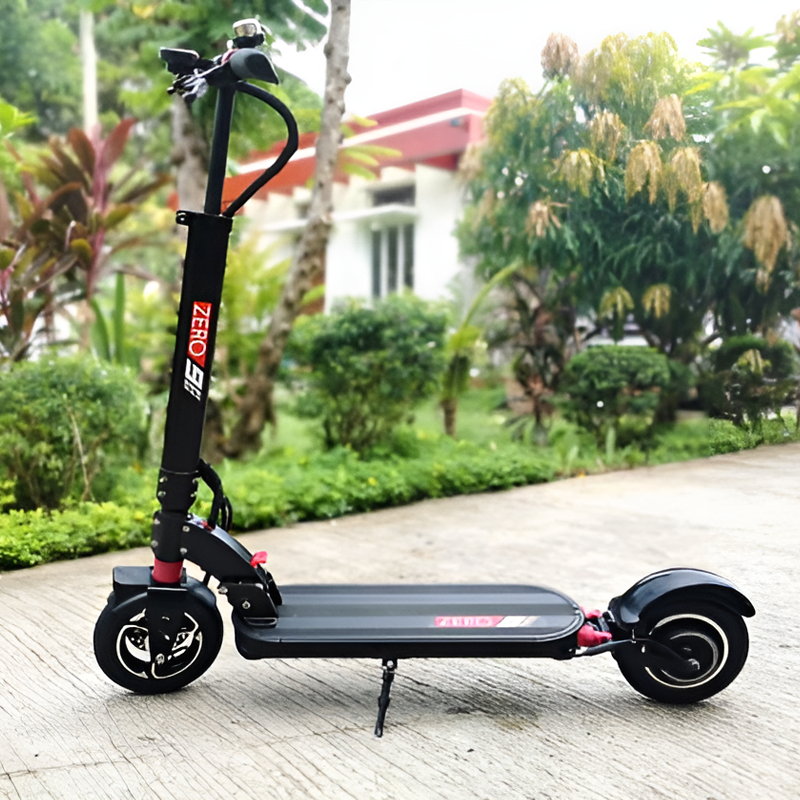
The Zero 9 is the faster scooter, and the speed gap is large enough to matter in real riding. At 20 mph, a scooter covers about 29.3 feet per second. At 28.4 mph, the Zero 9 covers about 41.7 feet per second. That extra 12.4 feet per second gives the Zero 9 more speed headroom on open commuter routes where higher speeds are legal.
What this means for US riders:
- The Zero 9 feels less capped on open roads and longer bike-lane routes.
- The F2 Pro's 20 mph limit is enough for many standard commutes, but it is not a speed-focused scooter.
- The Zero 9 gives more room between cruising speed and max speed, which can make the ride feel less strained.
- The F2 Pro is better for riders who prefer a controlled commuter pace over higher-speed riding.
Acceleration also favors the Zero 9. Review testing shows it reaches 15 mph in about 4.2 seconds, 20 mph in about 7.1 seconds, and 25 mph in about 11.8 seconds.
- That matters in city use because quick acceleration helps when leaving traffic lights, crossing open intersections, climbing ramps, or getting back up to speed after slowing down.
The F2 Pro is not underpowered for its class.
- Its 900W max output gives it respectable city response, and its 20 mph cap is enough for many riders. But it is designed more as a smart commuter than a performance scooter.
For riders searching for a zero 9 top speed, best commuter scooter for speed, or best 30 mph electric scooter, the Zero 9 is the stronger pick.
Hill Climbing
The Zero 9 wins in real hill performance because it has stronger tested performance. In review testing, the Zero 9 climbed a 200 ft, 10% grade hill in about 13.6 seconds with a 165 lb rider, averaging around 10 mph. That is useful because a 10% grade is already a serious incline for a single-motor commuter scooter.
Why the Zero 9 has the hill advantage:
- It uses a 600W nominal motor, compared with the F2 Pro's 450W nominal motor.
- Its review context lists around 1200W peak output, compared with the F2 Pro's 900W max output.
- It has tested hill data: 200 ft, 10% grade, 13.6 seconds, 165 lb rider.
- More motor headroom helps with ramps, bridges, and steeper city streets.
The F2 Pro has a claimed hill rating of up to 22%. However, claimed grade ratings can change quickly in real life. A scooter may handle a short slope but slow down on a longer climb, especially with a heavier rider, lower battery, colder weather, or repeated hill starts.
Where the F2 Pro still makes sense:
- Normal commuter hills
- Short ramps
- Moderate inclines
- Riders who do not need higher-speed hill climbing
- Routes where smart features matter more than raw climbing power
For riders searching for the best electric scooter for hills, the Zero 9 is the stronger real-world choice.
Range: Claimed vs Real-World
The F2 Pro claims up to 34 miles / 55 km of theoretical range. It also lists about 22 miles at max speed, which is more useful for riders who plan to use faster riding modes. The Zero 9 has a tested real-world range of about 21.7 miles.
Range factors that change real mileage:
- Rider weight
- Speed mode
- Average riding speed
- Temperature
- Tire pressure
- Hills and elevation
- Surface quality
- Wind
- Stop-start traffic
- Aggressive vs smooth throttle use
Battery size adds another important insight. The Zero 9 uses a 48V 13Ah battery, equal to about 624Wh. The F2 Pro uses about 460Wh. On stored energy, the Zero 9 has roughly 36% more battery capacity than the F2 Pro. But because the Zero 9 can ride much faster, it can also consume that energy faster when used aggressively.
How to read the range numbers honestly:
- F2 Pro wins the paper range claim with 34 miles / 55 km.
- F2 Pro's 22 miles at max speed is closer to a practical faster-riding estimate.
- Zero 9's 21.7 miles tested range is valuable because it reflects real-world review riding.
- Both scooters are realistically best for many 18–22 mile daily ride patterns, depending on rider and route.
The fair conclusion is this: the F2 Pro wins for maximum claimed range and efficiency. The Zero 9 wins if you want to use more of your ride at higher speeds.
Braking & Safety
Braking is one of the strongest conversion reasons to choose the Zero 9. The Zero 9 stops from 15 mph in about 10.2 ft in independent testing.
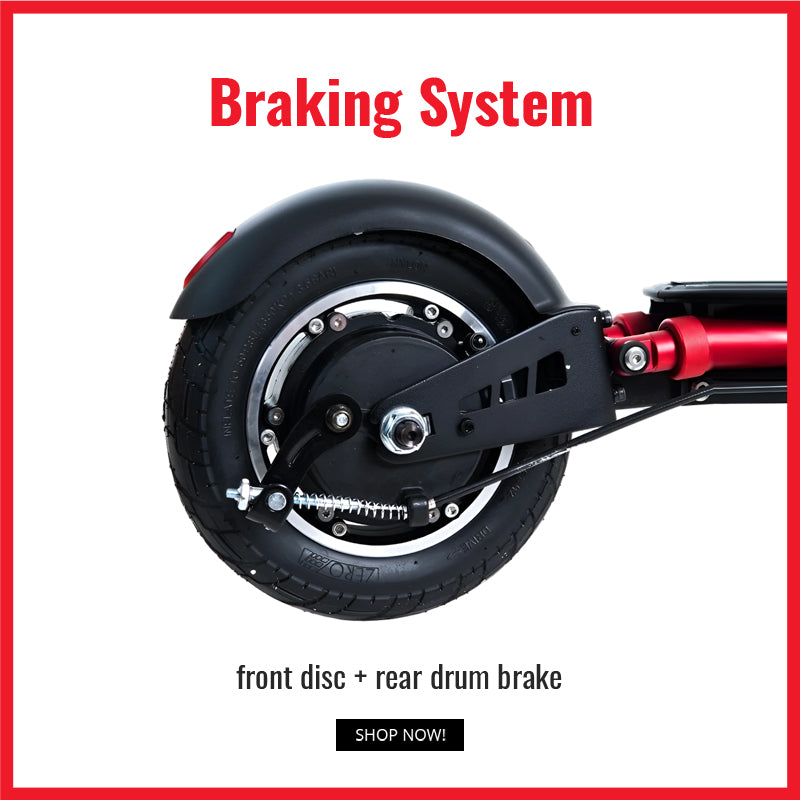
Why the Zero 9 braking setup matters:
- It uses a front disc brake.
- It uses a rear drum brake.
- It also includes regenerative braking support.
- Its tested stopping distance is about 10.2 ft from 15 mph.
- That braking number supports its higher-speed performance case.
The F2 Pro has a different kind of safety advantage. They matter in traffic because safety is not only about stopping distance. Visibility, signaling, tire grip, and rider predictability also matter.
F2 Pro safety strengths:
- Traction control system
- Turn signals
- Rear E-ABS
- Electronic horn
- App-connected features
- 10-inch self-sealing tubeless tires
- IPX5 splash resistance
The Zero 9 wins for raw stopping confidence, while the F2 Pro wins for smart safety aids.
At 28.4 mph, the rider is moving about 42% faster than at 20 mph. That means braking distance, reaction time, tire grip, and rider skill all become more important.
Safety should be viewed as a system:
- Braking distance
- Tire grip
- Suspension control
- Rider skill
- Speed choice
- Road surface
- Lighting and visibility
- Weather
- Helmet and protective gear
Ride Quality & Handling
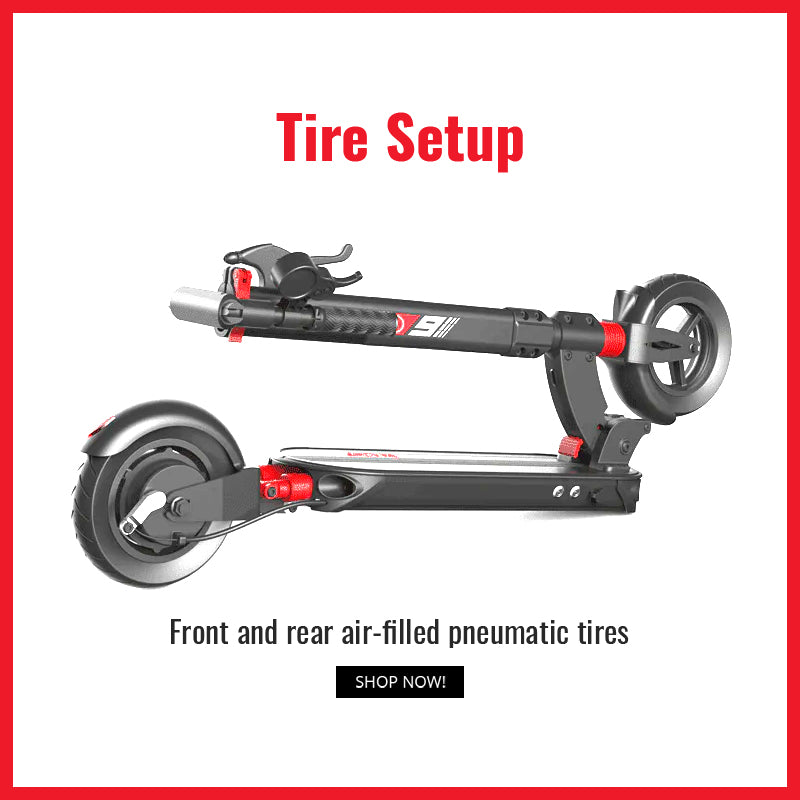
The Zero 9 has 8.5-inch pneumatic tires and dual suspension. Pneumatic tires help absorb small road vibration, while front and rear suspension help control larger bumps from both ends of the scooter. The Zero 9 also has a deck listed around 20.5 inches long and 7.7 inches wide.
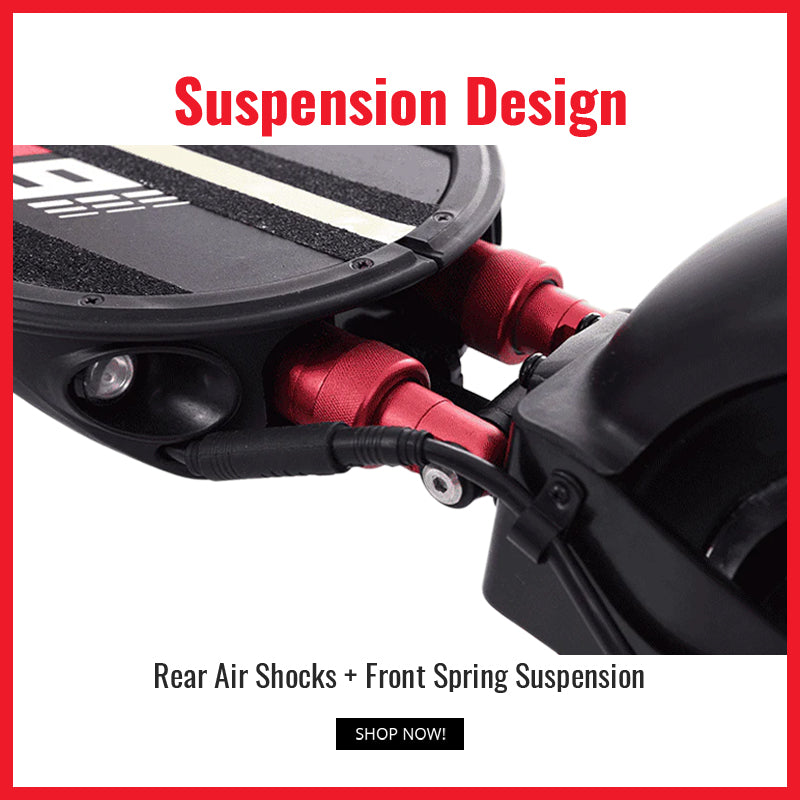
Why the Zero 9 feels more comfort-focused:
- Dual suspension supports both front and rear impact control.
- Pneumatic tires add vibration damping.
- Wider deck space improves rider stance.
- More stable positioning matters at higher speeds.
- The ride setup is built around performance comfort, not just basic commuting.
The F2 Pro has a real tire advantage. Its 10-inch self-sealing tubeless tires are larger and more flat-resistant than the Zero 9's tube-style tires. For riders who hate dealing with flats, that is a major daily ownership benefit.
Why the F2 Pro still handles daily commuting well:
- Larger 10-inch tires roll better over small surface imperfections.
- Self-sealing design helps reduce puncture anxiety.
- Front suspension adds some bump absorption.
- The 20 mph cap keeps the scooter within a controlled commuter speed range.
- It is easier to recommend for riders who prioritize low maintenance over dual suspension.
Riders on rougher pavement may feel more rear-end vibration with F2 Pro compared with the Zero 9's dual-suspension setup.
Build, Features & Electronics
The F2 Pro has a more modern smart commuter, while the Zero 9 is more traditional and performance-focused.
F2 Pro feature advantages:
- Traction control system
- Turn signals
- Apple Find My
- Segway app support
- Electronic horn
- IPX5 splash resistance
- 10-inch self-sealing tubeless tires
- Higher 265 lb rider limit
Zero 9 hardware advantages:
- 28.4 mph tested speed
- 10.2 ft braking from 15 mph
- 600W nominal motor
- Dual suspension
- Compact fold
- Wider deck feel
- Pneumatic tires
- Stronger speed and braking performance
That makes the value split very clear. The F2 Pro is the better tech-per-dollar scooter. The Zero 9 is the better performance-per-dollar scooter.
Portability & Daily Use
The Zero 9 is around 40–41 lb with the folded size around 43 inches x 7 inches x 14 inches depending on listing and review context. The F2 Pro is around 40.8–41 lb. Neither scooter should be called lightweight. A more honest description is carryable for many riders or compact-folding.
Zero 9 daily-use strengths:
- Compact folded profile
- Folding handlebars
- Practical for trunks and apartment storage
- Strong speed-to-size performance
- Better fit for riders who want compact performance commuting
F2 Pro daily-use strengths:
- Higher 265 lb rider limit
- Better fit for heavier riders
- Lower tire-maintenance anxiety
- Smart commuter features
- IPX5 splash resistance
- Stronger app-connected convenience
Price, Warranty & Value
The F2 Pro is the tech-per-dollar choice. It gives riders a 20 mph commuter scooter with a claimed 34-mile / 55 km theoretical range, 22-mile max-speed range, 265 lb rider limit, IPX5 rating, 10-inch self-sealing tubeless tires, 900W max output, and a strong smart-feature package.
F2 Pro value is strongest if you want:
- Smart commuter tech
- Claimed range
- Higher rider capacity
- Turn signals
- App support
- IPX5 splash resistance
- Lower-maintenance tires
The Zero 9 is the performance-per-dollar choice. It gives riders 28.4 mph tested speed, 4.2-second 0–15 mph acceleration, 10.2 ft braking from 15 mph, dual suspension, a larger battery around 624Wh, and a more performance-focused ride.
Zero 9 value is strongest if you want:
- More speed
- Stronger braking
- Better hill power
- Dual suspension
- Larger battery capacity
- Compact folding performance
- Real-world tested performance data
That makes the buying decision simple. If the rider wants the most features, app support, and lower-maintenance tires, the F2 Pro makes sense. If the rider wants the scooter to feel faster, stop harder, climb better, and ride with more suspension support, the Zero 9 is the stronger performance buy.
The 3 Honesty Charts
These three charts are useful because they show the buyer the most important truth: speed, range, and safety should not be compared using mixed or misleading numbers.
1. Speed Difference Chart
Top Speed: Tested vs Official
Zero 9 · Tested speed28.4 mph
F2 Pro · Official max speed20 mph
The Zero 9 is about 42% faster than the F2 Pro. Use 28–29 mph tested instead of calling it a guaranteed flat 30 mph scooter.
2. Range Honesty Chart
Range: Claimed vs Tested
F2 Pro · Claimed theoretical range34 mi / 55 km
F2 Pro · Max-speed range estimate22 mi
Zero 9 · Tested real-world range21.7 mi
3. Braking & Safety Chart
Braking & Safety: Two Different Strengths
Zero 9 · Mechanical stopping confidence
10.2 ft from 15 mph
F2 Pro · Smart safety aids
TCS, E-ABS, turn signals, app, e-horn
Insight: Zero 9 wins stopping distance. F2 Pro wins tech aids. True safety depends on braking, tires, suspension, speed, visibility, rider skill, road conditions, and protective gear.
Bottom Line: Which to Buy?
Buy the Zero 9 if you want speed, stronger braking, hill power, dual-suspension comfort, and a more performance-focused commuter scooter. Its 28.4 mph tested speed, 42% speed advantage over the F2 Pro, 10.2 ft braking distance, 4.2-second 0–15 mph acceleration, and 200 ft / 10% hill-climb test make it the better pick for riders who want performance first.
The Zero 9 is the better pick if you care most about:
- Faster tested speed
- Stronger braking confidence
- Hill climbing
- Dual-suspension comfort
- Wider deck stability
- Compact performance commuting
- Performance-per-dollar
The F2 Pro is the better pick if you care most about:
- Smart features
- Claimed range
- Lower tire maintenance
- Higher payload
- IPX5 splash resistance
- App support
- Tech-per-dollar
Buy the F2 Pro if you want claimed range, smart safety tech, turn signals, Apple Find My, app connectivity, IPX5 splash resistance, self-sealing tubeless tires, and a higher 265 lb rider limit.
For most riders comparing zero 9 vs ninebot f2 pro because they want more speed and stronger stopping confidence, the DRIDER Zero 9 is the better pick.
FAQ
Is the Zero 9 faster than the F2 Pro?
Yes. The Zero 9 tests around 28.4 mph, while the F2 Pro is officially capped at 20 mph. That makes the Zero 9 about 42% faster.
Does the F2 Pro have better range?
On paper, yes. The F2 Pro claims up to 34 miles / 55 km, while the Zero 9 has a tested real-world range of about 21.7 miles. But range depends on rider weight, speed mode, temperature, tire pressure, hills, surface, and riding style.
Which scooter has the shorter stopping distance?
The Zero 9 has the stronger braking-distance result, stopping from 15 mph in about 10.2 ft in independent testing.
Which scooter is better for hills?
The Zero 9 has the better real-world hill-performance case. It climbed a 200 ft, 10% grade hill in about 13.6 seconds with a 165 lb rider. The F2 Pro has a 22% claimed grade, but hill claims depend on rider weight, battery level, and hill length.
Which scooter is better for heavier riders?
The F2 Pro is better for heavier riders because it has a 265 lb rider limit. The Zero 9 is rated around 220 lb.
Which scooter has better smart features?
The F2 Pro wins smart features. It includes traction control, turn signals, Apple Find My, app connectivity, e-horn, IPX5 splash resistance, and self-sealing tires.
Which scooter should I buy for commuting?
Choose the Zero 9 if your commute needs speed, stronger braking, hill power, and dual-suspension comfort. Choose the F2 Pro if you prefer smart features, lower-maintenance tires, higher rider capacity, and claimed range.
Ready to ride the 30 MPH electric scooter?
Shop the DRIDER Zero 9 →
Our Products


ZERO 9 Scooter
$799.00